Helping Others-Natural Compassion
©Judy H. Wright
Sometimes, helping others is as automatic as breathing. It comes natural for many people. They radiate nurturance and acceptance to those they come in contact with during their daily journey.
Those who have open hearts and giving spirits tend to reach out to others in a caring way. They have an instinctive response when they see another person or animal who seems to be suffering or in need.
In my work as a trainer and educator, I have the privilege of working with two groups of these caring and helpful angels: those who work with children and those who work with the elderly. Frequently they are underpaid and certainly misunderstood by those who don’t recognize what value they add to our world.
It is their ability to help others who are vulnerable that indicates their true nature of natural compassion. They notice the signals of struggle, both verbal and non verbal and respond with kindness. Those with natural compassion help wherever and whenever it is needed by their charges: cutting the meat, going to the bathroom, putting on a jacket.
Helping others is so automatic to them that they see with eyes of mercy and empathy. Caring and compassion are reflexes.
If you are in a position to say thank you to a teacher, parent or CNA at a nursing home, please do so. They may have developed compassion as a habit, but the rest of the world who sometimes hesitate before helping others, should not take their actions for granted.
Rather, we should emulate and follow their example.
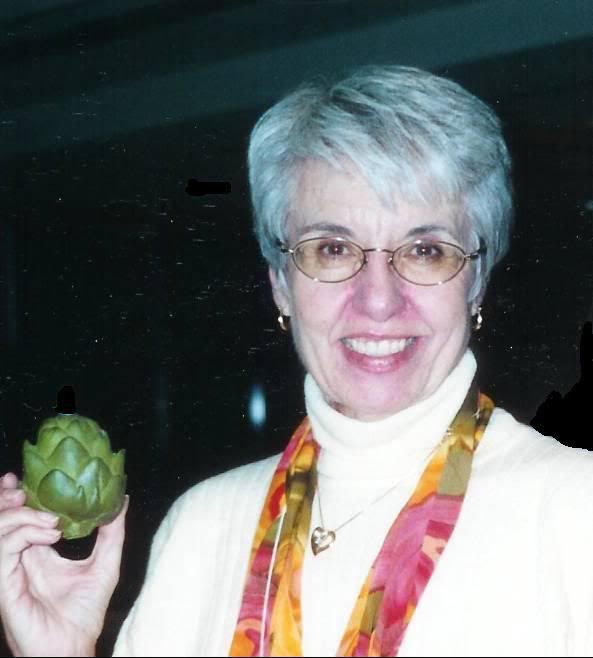
As we all work on becoming better people tomorrow than we are today, we can use assistance. If you are interested in learning more about the power of encouragement, receive a free eBook by clicking on http://www.UseEncouragingWords.com this book was written by Judy H. Wright aka Auntie Artichoke, the storytelling trainer who conducts workshops on mutual respect and kindness. To join her teleclass series or see the other books and articles available see http://wwwArtichokePress.com Join us at we find the heart of the story in the journey of life.
Showing posts with label nurture. Show all posts
Showing posts with label nurture. Show all posts
Tuesday, May 27, 2008

Tuesday, February 19, 2008
What is Comfort Care?
What is Comfort Care?
Comfort care means COMFORT, not cure. Our scientific and medical cultures are trained and geared toward cure, treatment, and results. It is often difficult to move from this modality into comfort care only.
Such things as lab work, blood sugar reading, monitors, antibiotics, artificial nutrition, food and water, meds, continued chemotherapy, insulin and other result and data gathering procedures may need to be questioned as the dying process progresses. We must ask what will truly comfort the dying person, both physically and emotionally and let this guide our actions.
Caring, nurturing and comfort can most often be accomplished without medical procedures or even food and water in most instances. However, if these things comfort a dying loved one it may be beneficial to continue them. Check frequently with the person for any desire for change or requests to discontinue any of these measures.
Some hospitals and nursing homes have comfort care units. Even in these units families and caregivers are encouraged to continue to ask what will truly be of comfort. We encourage families and care givers to continue acting as advocates for their loved one, to ensure that their needs and wishes are being met and respected.
-----
This information is from a new book by Judy H. Wright and Jane Franz on the loss of a loved one. Watch the website and blog for more information. We welcome your input and comments.
Comfort care means COMFORT, not cure. Our scientific and medical cultures are trained and geared toward cure, treatment, and results. It is often difficult to move from this modality into comfort care only.
Such things as lab work, blood sugar reading, monitors, antibiotics, artificial nutrition, food and water, meds, continued chemotherapy, insulin and other result and data gathering procedures may need to be questioned as the dying process progresses. We must ask what will truly comfort the dying person, both physically and emotionally and let this guide our actions.
Caring, nurturing and comfort can most often be accomplished without medical procedures or even food and water in most instances. However, if these things comfort a dying loved one it may be beneficial to continue them. Check frequently with the person for any desire for change or requests to discontinue any of these measures.
Some hospitals and nursing homes have comfort care units. Even in these units families and caregivers are encouraged to continue to ask what will truly be of comfort. We encourage families and care givers to continue acting as advocates for their loved one, to ensure that their needs and wishes are being met and respected.
-----
This information is from a new book by Judy H. Wright and Jane Franz on the loss of a loved one. Watch the website and blog for more information. We welcome your input and comments.
Subscribe to:
Posts (Atom)

no+man.JPG)